
Our alloys
Beryllium Copper Alloys at a Glance
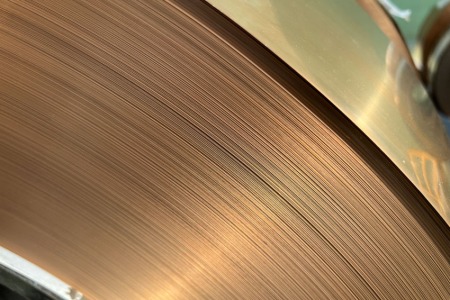
C17200
The C17200 alloy (Berylco 25) is undoubtedly the most versatile beryllium copper alloy:
– Good electrical conductivity
– Good formability
– Optimum mechanical strength after heat treatment
Read more
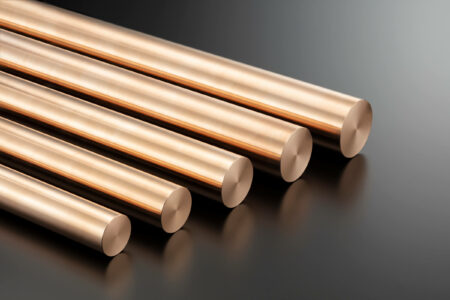
C17300
The C17300 alloy (Berylco 33/25) is the go-to beryllium copper alloy for screw-machining:
– Very high mechanical strength
– Excellent machinability
– Good electrical conductivity
Read more
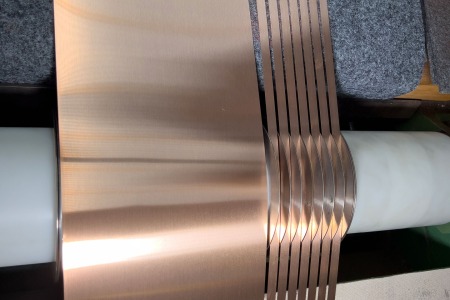
C17510
The C17510 alloy (Berylco 14) is the beryllium copper alloy of choice when conductivity requirements are paramount:
– Very high electrical conductivity
– Excellent formability
– Good mechanical strength
Read more
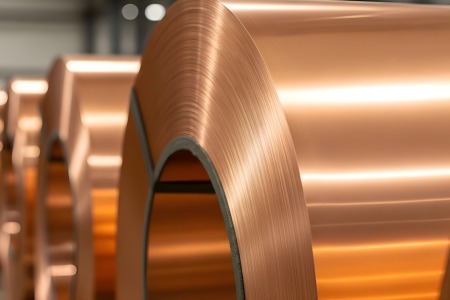
Other Beryllium Copper Alloys
NGK Berylco offers additional Berylco beryllium copper alloys for specific applications, including C17510 (Berylco 8), C17530 (Berylco 7), and C17000 (Berylco 165).
Read more
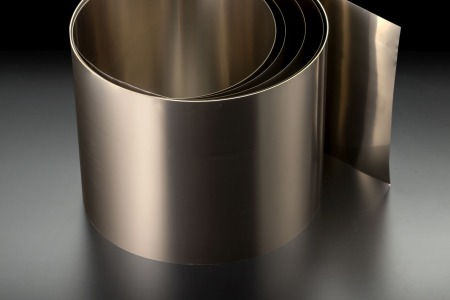
Other Beryllium-Free Alloys
NGK Berylco also offers GMX copper-nickel-tin alloys: C72700 (GMX 96), C72950 (GMX 215), and C72900 (GMX 158).
Read more
What Is a Berylco Beryllium Copper Alloy?
What is the composition of a Berylco beryllium copper alloy?


Beryllium copper alloys contain a maximum of 2% beryllium dissolved in a copper matrix.
The addition of beryllium significantly enhances the mechanical properties of copper without compromising its excellent conductivity.
Other alloying elements — such as nickel, cobalt, or lead — may also be added (up to 0.3–2% maximum, depending on the element and alloy) to provide additional benefits in terms of formability, bendability, or machinability.
Why are Berylco beryllium copper alloys used?
Thanks to their dual performance in strength and conductivity, beryllium copper alloys are widely found in electrical and electronic equipment — particularly in contactors and connectors.
These alloys are the most versatile and highest-performing within the copper alloy family. They combine a unique set of properties that make them essential materials for the production of critical components across many industrial sectors.
When reliability and durability are essential — or even mission-critical — beryllium copper alloys deliver superior performance. Under extreme operating conditions, they offer unmatched strength and resilience.
In which industries are they used?
Beryllium copper alloys are found in the most demanding and strategically critical applications, where failure is simply not an option.
Key markets include automotive (particularly safety-critical applications), aeronautics, space, defense, telecommunications, energy, medical, and high-end home appliances.
For example, a commercial aircraft contains over 40,000 connectors. Beryllium copper is the material of choice to ensure passenger safety in flight.
How to Identify and Select a Berylco Alloy
What are the available grades?
Beryllium copper alloys come in a range of compositions, each tailored to specific property requirements. NGK Berylco offers 3 main grades and several additional grades designed to meet specific performance criteria.
Our three core alloys: Berylco 25, Berylco 14, and Berylco 33/25.
Copper alloy designation standards — how do they work?
There are 3 main standards used in industry to designate copper alloys:
- ASTM standard (American Society for Testing and Materials): This standard uses the Unified Numbering System (UNS), based on five-digit numbers preceded by the letter C for copper. The numbers identify the alloy type and composition. Our three core alloys: C17200 (Berylco 25), C17510 (Berylco 14), and C17300 (Berylco 33/25).
- ISO standard: The International Organisation for Standardisation (ISO), the French standardisation body AFNOR, and the German standardisation institute DIN (Deutsches Institut für Normung) have developed an approach based on the chemical symbols of the main alloying elements and their weight percentages. This descriptive designation makes it easy to identify an alloy by its composition. Our three core alloys: CuBe2 (Berylco 25), CuNi2Be (Berylco 14), and CuBe2Pb (Berylco 33/25).
- British Standard (BS): This standard uses a system similar to the European standards of the European Committee for Standardisation (CEN), based on a six-character alphanumeric code. The first letter C denotes a copper alloy. The second letter specifies the product form (W for wrought products). Three digits and a letter then identify the alloy composition. Our three core alloys: CW101C (Berylco 25), CW110C (Berylco 14), and CW102C (Berylco 33/25).
What are temper conditions?
Chemical and mechanical processes can be applied to the material to impart specific properties that meet customer specifications.
The chemical process consists of a heat treatment or aging cycle — a controlled low-temperature thermal treatment that increases the hardness and mechanical properties of the material.
The mechanical process consists of cold working or rolling — the physical compression of the material. This elongates the grain structure, reduces thickness, and increases hardness.
Beryllium copper is the only copper alloy that can be hardened by both methods — cold working and age hardening. Our metallurgical expertise lies in combining these chemical and mechanical operations in the right sequence to achieve the material specifications required by our customers.
At the end of the production cycle, we carry out cleaning, corrosion inhibition, and optionally gold or silver plating operations, in order to enhance the conductivity of our alloys while protecting against corrosion.
Contact our experts to learn more.
What are the technical characteristics of a Berylco beryllium copper alloy?
A copper alloy is defined by a set of mechanical properties and its electrical conductivity:
- Tensile strength Rm: expressed in N/mm² or MPa.
- Yield strength Rp: expressed in N/mm² or MPa.
- Elongation A50: elongation at fracture, expressed as a percentage over an initial gauge length of 50 mm.
- Hardness HV (Vickers Hardness): surface hardness. Other hardness scales: HB (Brinell) and HRC (Rockwell).
- Formability R/t (Bend Radius / Thickness): the ability of the material to be formed.
- Electrical conductivity: expressed relative to pure copper, in % IACS (International Annealed Copper Standard). It varies depending on the alloy composition and temper condition, in terms of cold work and heat treatment.
Please refer to our catalog for the full property data of our alloys.
What is the EN 1654 standard?
European Standard EN 1654 specifies the composition, mechanical properties, and dimensional tolerances for wrought copper and copper alloy products intended for the manufacture of springs and connectors. EN 1654 also defines sampling procedures and test methods for verifying these characteristics.
According to EN 1654 — a standard required notably by the aerospace industry — beryllium copper is an outstanding spring material, suitable for use at extremely low temperatures down to near absolute zero. Furthermore, beryllium copper alloys are fully non-magnetic, offer excellent electrical conductivity, and exhibit very high corrosion resistance in the presence of a wide range of fluids.
NGK Berylco offers a product range fully compliant with the EN 1654 standard.