
Beryllium
Beryllium metal exhibits a unique combination of physical and mechanical properties, unmatched by any other metal.
Our Beryllium Products
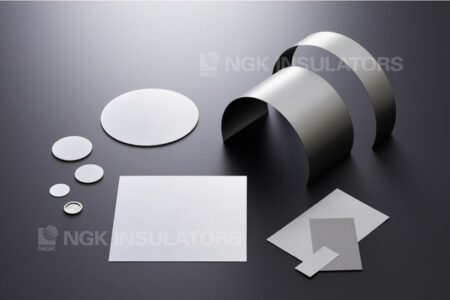
Windows
Its perfect X-ray transparency makes beryllium the ideal material for windows in medical and security imaging equipment.
Read more
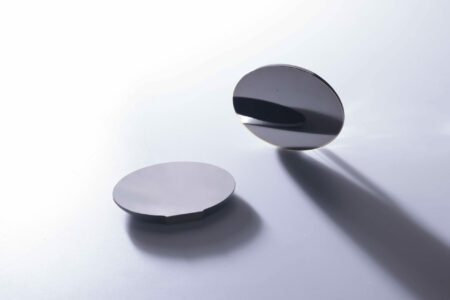
Mirrors
Due to its exceptional optical qualities, beryllium is used to manufacture mirrors for advanced applications, including printed circuit board etching.
Read more
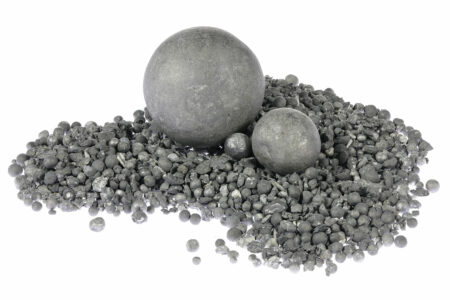
Other Components
Thanks to its non-magnetic and nuclear properties, beryllium is used in a wide range of industries, including nuclear energy, defense, aerospace, and high-performance enclosures.
Read more
Key Properties

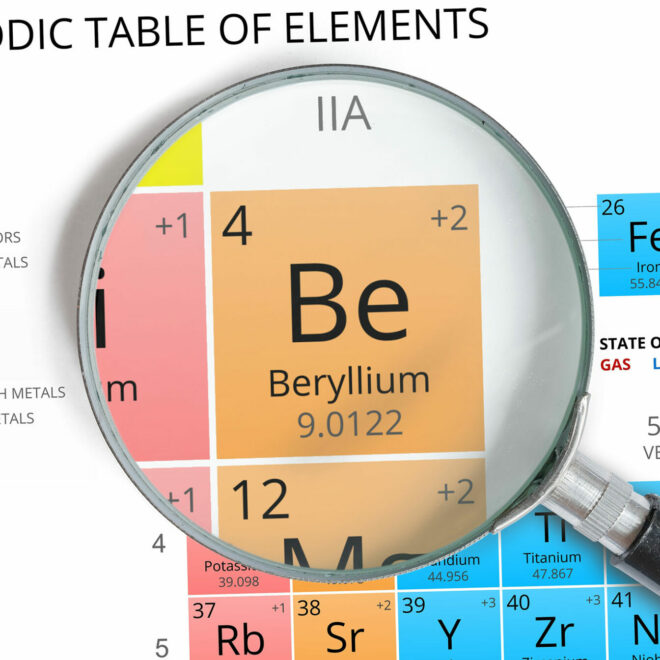
Beryllium is a low-density metal (1.848 g/cm³) with numerous qualities, making it difficult to substitute and widely used across many high-tech industries and applications. Its properties make it a first-choice material in numerous industrial fields.
Indeed, it is one-third lighter than aluminum and six times stiffer than steel, highly resistant to torsion, an excellent conductor of heat, a good conductor of electricity, resistant to corrosion and acids, and it only melts at a very high temperature (1287 °C). It is also non-magnetic and permeable to X-rays, with a transparency 17 times greater than that of aluminum at equal thickness.
Its very high permeability to X-rays is utilized in X-ray generating equipment; its ability to transmit sound at very high speeds is used in speaker diaphragms; its light weight and mechanical strength are valued in the aerospace and aviation industries; and its specific nuclear properties make it indispensable in the nuclear energy sector.
Due to its perfect X-ray transparency, beryllium is essential for the production of X-ray windows. The use of pure beryllium metal is therefore crucial in medical imaging (mammography, medical laser scanners, computed tomography, etc.) as well as in airport security control systems.
The Unique Combination of Beryllium Properties
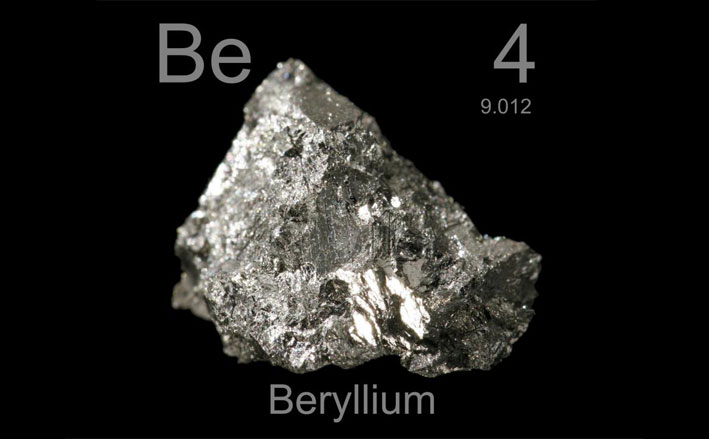
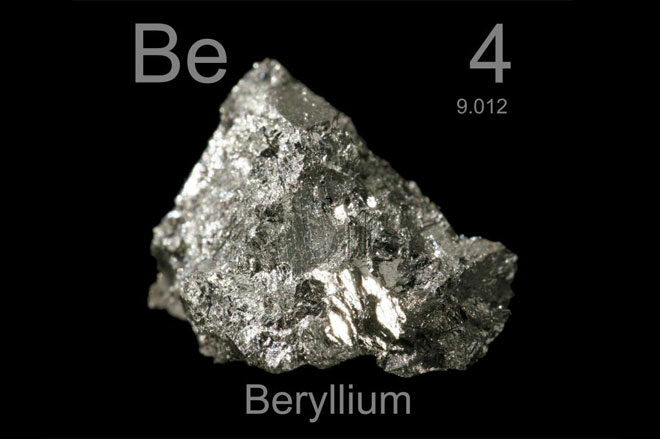
Beryllium is the fourth element in the periodic table, with extremely low density—making it the second lightest metal.
| Chemical Symbol | Atomic Mass | Melting Point | Boiling Point | Density |
| Be | 9.01 | 1 285 °C | 2 470 °C | 1.85 g/cm3 |
Beryllium is stronger than steel, conducts electricity efficiently (>40% IACS), barely oxidizes, is non-magnetic, anti-sparking, and fully transparent to X-rays.
About Beryllium
Beryllium was discovered in 1798 by the French chemist Louis-Nicolas Vauquelin.
Its name comes from the Greek word beryllos, referring to the beryl mineral.
Due to its sweet taste, it was originally named “glucinium,” from the Greek glikys (sweet).
Beryllium is a naturally occurring element found in oxides and aluminosilicates, such as the precious gemstones emerald and aquamarine.
It is a steel-gray metal, typically extracted from over 30 ores—primarily bertrandite and beryl.
Beryllium has the highest melting point of all light metals (1287 °C). It is one-third lighter than aluminum and six times stiffer than steel. Highly resistant to both tensile stress and corrosion, it also exhibits excellent thermal and electrical conductivity. It is non-magnetic and permeable to X-rays.
The importance of Beryllium
Beryllium metal truly began to take on strategic importance starting in 1965 in the fields of space, defense, and nuclear energy. It is now primarily used in applications that are essential to our daily lives, such as communications, automotive, aerospace, home appliances, watchmaking, and medical technology—mainly in the form of copper-beryllium alloys (or beryllium bronze). In these alloys, beryllium—added at up to 2%—significantly improves the mechanical properties of copper without compromising its electrical and thermal conductivity. It also enhances copper’s resistance to fatigue and corrosion. Its unmatched advantages in terms of performance and reliability make beryllium and its alloys the most suitable materials to meet the demands of high-tech equipment.
Due to its economic importance and non-European origin, beryllium has been included in the list of critical raw materials for the European Union since the first edition published by the European Commission in 2011.
Working on a Beryllium Copper Project?
NGK Berylco UK (DK, GB, IE, IS, NO, SE)
Other countries