
Our alloys
C17300 (CuBe2Pb / Berylco 33/25): free-machining beryllium copper alloy
Properties
The C17300 alloy, also known as CuBe2Pb (Berylco 33/25 or B33/25), is a lead-bearing variant of C17200 (B25). The small lead addition (0.6% maximum) significantly enhances machinability by promoting chip breakage and reducing tool wear. The machinability rating of C17300 (CuBe2Pb) reaches 60%, compared to 20% for C17200 (CuBe2).
The C17300 alloy (B33/25) achieves exceptional mechanical strength levels comparable to C17200 after age hardening. Supplied in rod form, it is primarily intended for machined parts and screw-machining operations. Typically hardened after machining, B33/25 is distinguished by its high fatigue strength, excellent stress relaxation resistance, and a unique combination of mechanical strength and electrical conductivity. It can be locally annealed to allow crimping after hardening and is easily electroplated.
Equivalent Standards
| Standard | Numbering System | Designation |
| ASTM | UNS | C17300 |
| ISO / AFNOR / DIN | ISO | CuBe2Pb |
| BS | EN | CW102C |
| NGK | Berylco | Berylco 33/25 (B33/25) |
Applications
Precision Machining & Screw Machining. With a machinability rating of 60% versus 20% for C17200, C17300 significantly reduces tool wear and increases output in series production. It is the reference alloy for complex machined beryllium copper components.
Electronics & Connectors. Connectors, pins and machined contacts in C17300 deliver the same electrical performance as C17200, with a decisive advantage at production volumes. Discover our electronics applications.
Automotive. Sensors, injection components and high-volume precision parts: C17300 meets the reliability and throughput requirements of the automotive industry. See our automotive applications.
Medical. Surgical instruments and precision machined parts in C17300 combine mechanical strength, non-magnetism and surface treatment compatibility. Medical applications.
Our Products
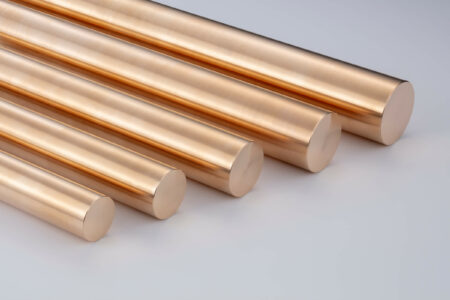
C17300 (B33/25) is available in rod form only, in a range of diameters (from 1 to 28 mm). It can be supplied in coil form.
Why Choose NGK BERYLCO for C17300
We maintain a stock of rods in various diameters at our facility in Couëron, France, enabling us to offer both competitive pricing and fast delivery lead times.
Our rods are delivered in quality wooden crates. The standard length for C17300 (B33/25) alloy rods is 3 metres.
FAQ (Frequently Asked Questions)
For screw-machining or turning operations on beryllium copper rods, where minimizing tool wear and maximizing production rates are key priorities, we recommend the C17300 alloy (B33/25).
C17300 (B33/25) contains a small amount of lead, which improves its machinability by increasing chip size during turning or screw-machining operations. Larger chips reduce abrasion and extend the service life of machining tools.
C17300 (B33/25) promotes efficient chip formation, enabling higher production rates without causing premature tool wear.